As a college professor of philosophy for over 40 years I have closely watched shifts in higher education. Most of it has gone in a direction that many college CEOs would not want you to think about.
Basic idea: the college market is oversold, in my judgment.
Here’s what I mean.
First, the difference between gold standard universities and those on lesser tiers is in some cases hyped. The truth is that talented young people are going to go on to graduate school to advance their careers. Consequently it is not necessary to spend big money for a bachelor degree at a prestigious university in order to get into a decent graduate program. In other words, an undergraduate degree from "Harvard" is not as essential as it used to be or as many people still think is.
Second, many basic courses that are required for freshman and sophomores at top-line colleges are often taught by a big name professor who seldom shows up for lectures. He or she has graduate assistants. While the big guy may give some lectures, he often has his assistants do the lectures. And the one lecture a week that he does present are often followed by two follow-up sessions that are handled completely by the grad student.
At smaller colleges there is usually more contact with the professors than at big-ticket schools. So the reality is that you are often paying more for the packaging than for the product. At research universities many professors are buried in their research. Teaching is not their main passion. And sometimes it shows—to the detriment of the student.
Third, it is a buyer’s market. A student can generally transfer to university after a year or two in another college. Many universities, facing a shrinking pool of college age students, are competing for students with decent grades.
Fourth, parents should think long and hard about the experience their child is going to get at any college or university. Some universities are social engineering factories. Call it brainwashing if you want. You may think you are paying for polishing the 3 Rs, but often the goal is to break down the traditional values you have worked hard to engender in your child and to transform their worldview to a secular one. Traditional values will often be ridiculed and sometimes penalized. Professors can be among the most narrow-minded intolerant people anywhere to be found. I know. I have been inside academia for over forty years now. Rather than teaching their subject, they use it as a platform of indoctrination. Or they teach their subject but slant it. College education used to be a reasonably fair presentation of various sides to questions that have moral or political implications. In many universities that is gone. Do you want to pay a huge price for this kind of education?
Now admittedly this is not the case everywhere. But it is so prevalent that it behooves parents to investigate carefully. At the college where I have taught for four decades there is much talk about diversity of faculty. But this has been reduced to a formula to have more female or minority professors rather than diversity of points of view. This is especially true in the liberal arts—where your pride and joy will take core courses in literature, psychology, sociology, history and government, and the like. At my college out of several dozen faculty in these departments there are two or three of us who hold to views generally labeled conservative or traditional. What do I mean? Belief in God, in small government, in traditional moral values and so on. I would not say this is meaningful diversity. There is a lot of talk about tolerance. But only a kind of politically correct tolerance is tolerated.
If I were sending my kids to college at this time (it would be grandchildren now) here’s what I would think about.
I would send them to a college with strong values. A Christian college would be my first choice—if I could afford it.
If I had only a modest budget to work with I would send them to a community college for two years so they could still live at home. This yields a savings of about $15,000 to $20,000 each year. It also enables them to stay in a safer environment at home and in church or other wholesome community organizations. High school graduates do not need to swim in the moral sewage of a typical freshman dorm at certain universities. People can learn to swim against strong tides—but are they strong enough at age 18 or 19? Then after a year or two at a community college the student can transfer to the four-year university and get that impressive name brand degree.
For some high school graduates, I would send them for two years of community college followed by a few years in the workforce. At 25 many young people still do not have a clear direction for life. Or perhaps they may volunteer at home or abroad so they can sort things out.
Most people now require education over their working lifespan. People get their undergraduate degree in their thirties or even forties when it is of more value to them. Thus there should be no pressure to follow the traditional track—graduating from college at age 21, graduate school at 25 and then into your life work.
The bottom line is that parents should think twice about the oversold traditional track for students getting out of high school. The way we do education is changing. Educate yourself on the alternatives to that track and make an informed decision.
Explore the possibilities of web-based education. I have been teaching philosophy online now for nearly ten years. For many students it can be a helpful alternative.
Think outside the box, they say.
It is time to think outside the dorm.

About Me
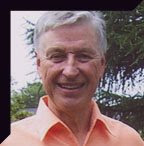
- Jim Gustafson
- In case you are the kind of person who likes to have the background of a writer to help judge whether his or her opinion is an informed or educated opinion, let me present my "credentials." I graduated from Roxbury Latin School (Boston), Wheaton College, Fuller Seminary, and crowned my formal education with a PhD in philosophy from Boston University. I have been teaching philosophy at Northern Essex Community College for over 30 years and I teach as a volunteer in Kenya and India. I have published The Quest for Truth, an Introduction to Philosophy, now in its 6th edition. Lover of the outdoors, I have hiked and camped all over New England with friends and family. Like to fish, too - mostly catch and release style. My chain saw can be heard in our family forest in Vermont where I make up firewood to warm us when the snow is howling. My wife, Eleanor Gustafson, is a published novelist. Our greatest production however is our three children, all very successful adults with super spouses, who who have given us perhaps the greatest earthly joy of all - eight delightful grandchildren. Talk about blessings In 2012 I wrote "Wheat & Weeds: a History of West Cong'l Church."
No comments:
Post a Comment